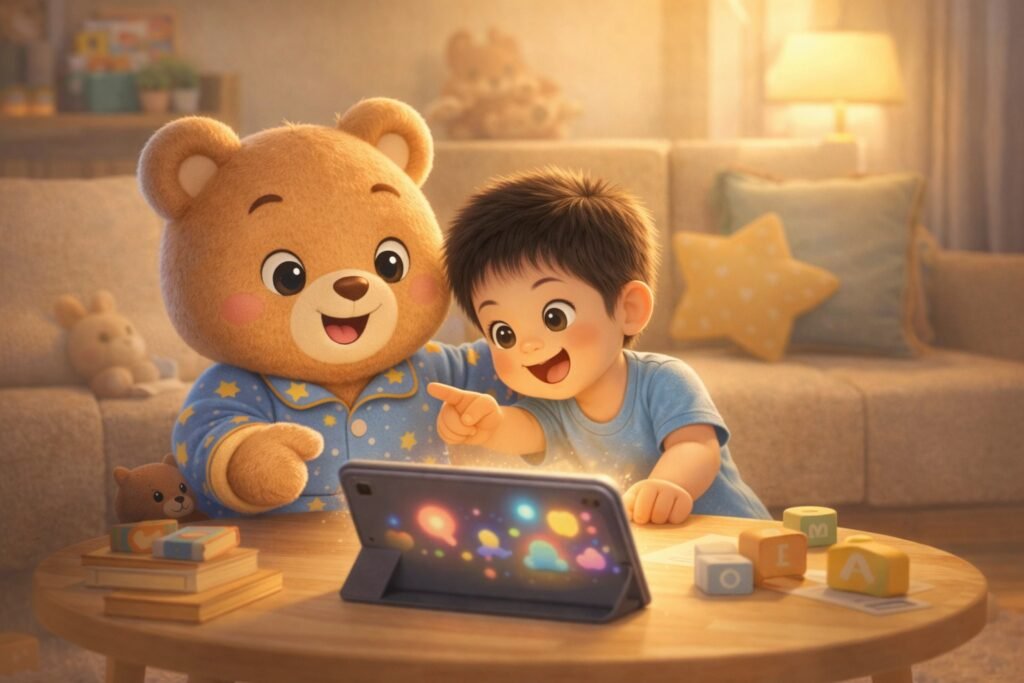
Are Educational Videos Good for Kids? What Parents Should Know
Are educational videos really helping your child? Learn how to choose the right content and turn screen time into meaningful learning for kids.

Many parents ask:
👉 “Are educational videos good for kids?”

The answer is not simply yes or no.

👉 It depends on how the videos are used

Not All Educational Videos Are Effective

Some so-called “educational” content:

  • Is too fast
  • Is too noisy
  • Lacks real learning value

👉 Children may watch, but not understand.

What Makes a Good Educational Video

Look for content that:

  • Has a clear story
  • Uses simple language
  • Encourages thinking
  • Is not overwhelming

Passive vs Active Learning

❌ Passive watching:
Child just watches

âś… Active learning:
Child:

  • reacts
  • thinks
  • understands

👉 This is the key difference.

How Parents Can Improve Learning

You don’t need to do a lot.
Just:

  • Ask simple questions
  • Talk about what happened
  • Relate to real life

Even a few minutes makes a big impact.

Balance Is Important

Educational videos should:

  • Not replace real interaction
  • Be part of a balanced routine

Final Thoughts

Educational videos are not harmful —
but they must be intentional and meaningful.

When used correctly,
they can support your child’s learning in a powerful way.

You’re just one step away from enjoying this content.

Choose a plan to unlock access and continue.

For Parents
How It Works
Choose Your Child’s Stage

From Little Listener to Story Adventurer — pick what fits your child’s age.

Watch & Enjoy Stories
Fun, engaging stories with Benny Bear and friends.
Learn Naturally
Build language, thinking, and values through storytelling.
Grow Step by Step
From listening → understanding → thinking → imagination.
For Parents
Our Learning Approach
We believe children learn best through stories, not memorisation.
Story-Based Learning

Children understand better when learning comes through stories, not instructions.

Natural Development

We support how children grow — from listening → understanding → thinking.

Emotional Learning
Stories help children understand feelings, behaviour, and real-life situations.
No Pressure Learning

No exams, no stress — just meaningful and enjoyable learning.

For Parents
Age Guide
Choose the stage that best matches your child’s development.
Little Listener (0–2)
Build listening skills, bonding, and early language
Curious Explorer (3–4)
Discover the world, ask questions, and explore ideas
Confident Reader (5–6)
Strengthen understanding, vocabulary, and early reading
Story Adventurer (7–9)
Develop thinking, imagination, and deeper learning